
How to Search Criminal Dockets
Free and statewide, the Arizona Public Access Case Lookup is the first stop for a public Mohave County criminal docket. Pick the exact Mohave court first. A number search splits the prefix from the numeric body. A name search requires the last or business name. Adding a first name, date of birth, or court choice narrows a common name. The lookup draws on participating courts only. So the court named on a result matters as much as the party name. Follow this order. An early Justice Court matter will not be confused with a later Superior Court felony case:
- Read the citation, release paper, or notice and identify the issuing court and full case number.
- Search by that number, or use the defendant's last name plus the exact court.
- Match the court, number, case type, party role, and status before opening the history.
- Read every charge count, then place hearings, pleas, rulings, and dispositions in date order.
- Check the assigned judge's Mohave calendar for a future setting and call the custodian if entries conflict.
- Ask that clerk for the named filing or a certified disposition when the public index is not enough.
Mohave Felonies May Have Two Numbers
A felony can open with an initial appearance or preliminary stage in one of Mohave County's Justice Courts, then move after an indictment or information to the Superior Court of Arizona in Mohave County. Each level can assign its own number. That is not a duplicate record. Neither number cancels the other. Two courts are simply doing different jobs in one prosecution.
If the first paperwork names Kingman/Cerbat, Bullhead City, Lake Havasu, or North Canyon, search that originating Justice Court first. Then search Superior Court for the felony trial record. The Justice Court history may stop at transfer, while the Superior Court history carries the later motions, trial settings, plea activity, disposition, and sentencing. Searching one number alone can miss half the story. The Mohave County case search guide explains the statewide name and number fields in more detail. It covers both court levels at once.
What a Criminal Docket Shows
A Mohave County criminal docket usually shows a header, the parties, the charges, a chronological case history, hearing details, and any result entered so far. Treat it as an index. It does not promise that every pleading or minute entry opens for free. Protected identifiers stay hidden too.
| Case number | The court identifier, often with a category prefix such as CR; copy the printed form exactly. |
|---|---|
| Charge counts | Each public offense description, classification, and count, with its own result where supplied. |
| Parties | The State, defendant, prosecutor, and counsel roles that are open to public view. |
| Events | Filed and court-generated entries such as motions, orders, minute entries, warrants, and bond activity. |
| Hearings | Arraignment, pretrial, trial, change-of-plea, sentencing, and other settings, including the latest result. |
| Disposition | The result for a charge or case. One count's dismissal does not decide every other count. |
Mohave Certified Criminal Dispositions
When the public history is not enough, ask the clerk who entered it for a certified disposition. Name the exact court, case number, defendant, and the document or result you need. Superior Court takes email, fax, phone, or mail. Requests can also be made at one of three Clerk counters. A Justice or Municipal disposition must come from that limited court. Certification authenticates the copy; it does not unlock sealed or confidential material.
Read Mohave Charge Counts Separately
One status label can hide a mixed result. A Mohave County criminal docket may list several counts, and each count can carry its own plea and disposition. Begin with Count 1. Match it to its description and its result, then repeat the check for every count. Move next to the sentence and minute entries to see what the court actually ordered. One dropped count is not the whole case.
- Disposition
- The result assigned to a charge or case.
- Minute entry
- The written record of a court proceeding or ruling.
- Set aside
- Arizona relief noted in the record under statute; it does not erase the historical docket.
- Sealed
- Access restricted by law, rule, or order, not simply a case that a search failed to find.
A warrant entry needs the same context check. It may be old and later quashed. Read forward to the newest entry. Confirm current status with the actual court before acting.
Plea and sentence entries deserve equal care. A plea records the defendant's answer to a charge. A disposition records the result, and a later minute entry may hold the sentence terms. Public Access can spread these facts across several dated rows. Read them as a sequence, not as interchangeable labels. When another office must see a formal result, get the certified disposition or judgment from the court that entered it.
Stages on a Criminal Docket
The order varies with the charge and the court. Still, a Mohave County criminal docket records the major steps as they happen. Arraignment advises the charge and takes a plea. Pretrial settings manage the case toward a negotiated plea or trial. A filed motion is only a request until the judge enters an order. Sentencing follows a conviction or accepted plea when required.
Mohave criminal docket flow: Charge Filed › Arraignment › Pretrial Settings › Plea or Trial › Disposition › Sentencing
Scheduled does not mean held. Check the event result and newer entries for a cancellation, continuance, or reset. The official Mohave court calendar directory lists settings by judge and court, so use the division named in the case notice.
Mohave Criminal Documents After 2010
A docket entry can name an order without showing the paper itself. For Mohave County Superior Court civil and criminal cases, Arizona eAccess handles documents. This applies to cases filed on or after July 1, 2010. You need an account, and fees for copies or certified electronic versions may apply. The first-page preview is stamped unofficial.
Seeing "Document Not Available Online" means just that. The event can still be real. The image may be missing, private, or outside eAccess coverage. Request the paper from the Clerk of the Superior Court in Mohave County. Give its title and filing date. Email, fax, phone, mail, and counters in Kingman, Bullhead, and Lake Havasu all work. Justice and Municipal Court filings stay with their own clerks.
The official set-aside statute shows why reading the document and the later docket entries pays off. It links the order to what follows on the docket.
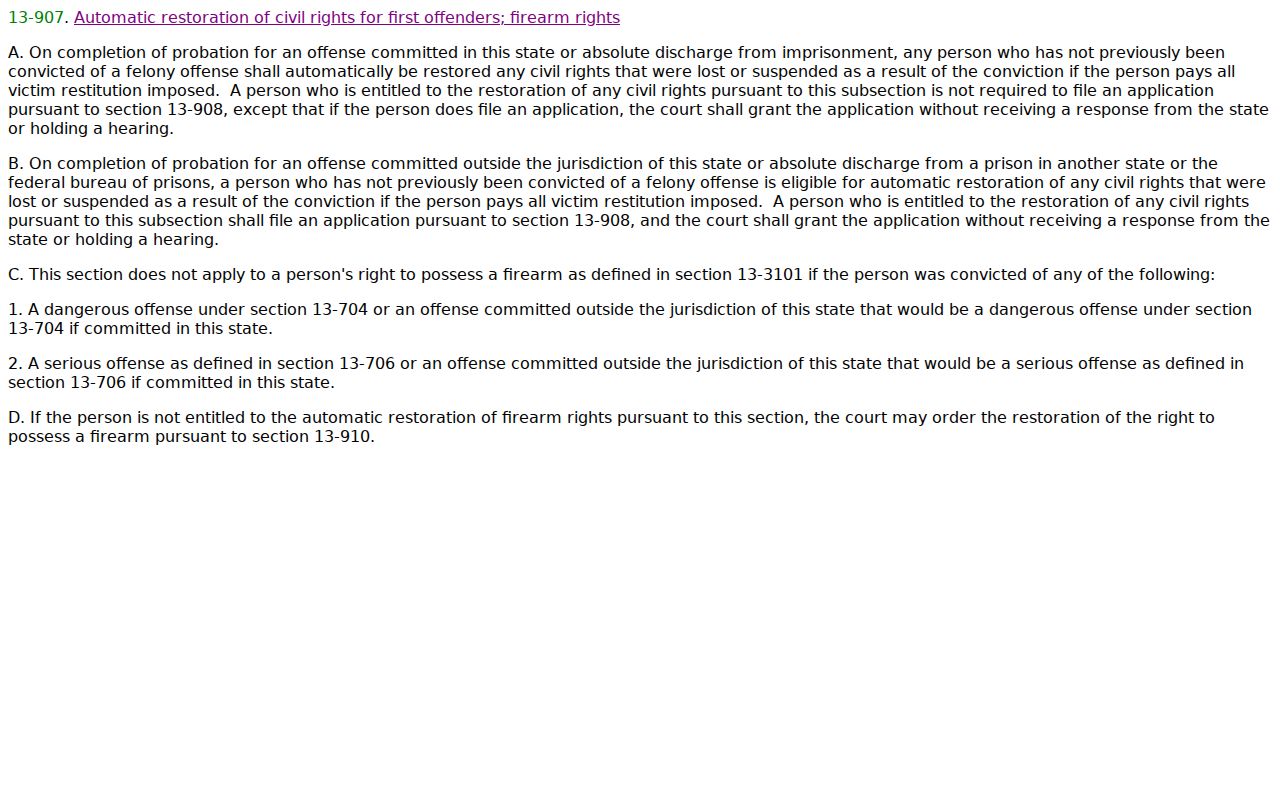
A set-aside entry changes the judgment record as Arizona law allows. The earlier Mohave County criminal docket still exists, though, and it never disappears.
Which Court Holds Criminal Dockets
Who holds the file depends on the charge. The elected Clerk of the Superior Court in Mohave County keeps felony files. Four Justice Court locations hold county misdemeanors plus felony preliminary-stage records. Municipal Court clerks keep city misdemeanors, ordinance cases, and city traffic files. One clerk cannot certify a file another court owns.
That custody rule drives every route you take. Statewide Public Access gives the index, and eAccess covers eligible Superior Court images. Mohave judge calendars show settings. If something is missing or needs certification, call the court named in the header. Lake Havasu Justice Court posts direct extensions for pending felonies, pending misdemeanors, post-sentence misdemeanors, and criminal record or bond questions. That saves a transfer when that court owns the file.
Mohave Specialty Events Stay Underlying
Mohave Adult Probation and Superior Court run treatment and problem-solving programs. No general public database lists participants. Eligibility, assessment, supervision, treatment, incentives, sanctions, and graduation are program business. Any public court event stays tied to the underlying criminal case number. Clinical records remain protected.
Follow public activity with the ordinary case number and assigned division. A calendar label alone does not prove enrollment. Ask program staff only about public logistics. Get the official docket or disposition from the court holding the case.
Public Access and Sealed Criminal Dockets
Arizona Supreme Court Rule 123 governs access to judicial records in every Arizona court. Superior, Justice, and Municipal alike are covered. Remote access can be narrower than inspection at the counter. The statewide lookup leaves out sealed cases. Orders of Protection, mental-health and probate matters, and victim or witness information are left out too. So a missing Mohave County criminal docket result does not prove no case exists.
Key Arizona access rules:
Rule 123 defines court records, closed categories, remote access, custodians, and review of access denials.
A.R.S. § 13-911 creates a judicial process for sealing eligible criminal case records.
A.R.S. § 13-907 governs set-aside relief, which differs from sealing and does not erase all docket history.
When a known case fails to appear, give its custodian the exact case number. Ask three things. Does the case exist but sit nonpublic? Can a redacted copy be produced? And what order would open access? Staff cannot release restricted facts just because a caller claims a relationship to the case.
A formal Rule 123 request is the next step when ordinary channels fail. Describe the record without asking the court for new analysis. Send the request to the custodian of that exact court. If access is denied, the rule provides a review mechanism. Parties and counsel may hold authenticated access the public lacks. But that status runs through the court, not a name match.
The criminal-record sealing source lays out the statutory route for eligible matters.
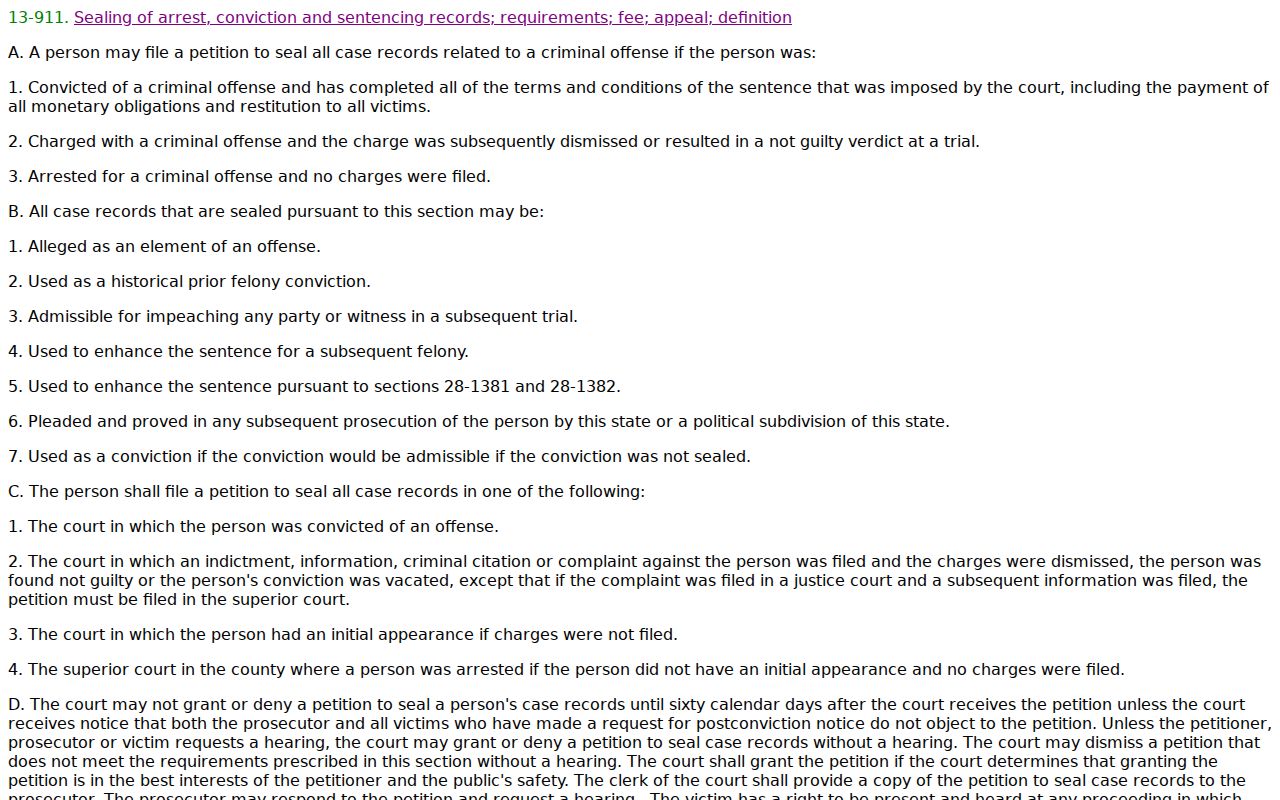
Access changes only come through legal process and a court decision, never a search-engine guess.